The ruins
Temple ruins
Wat Maha That
Compare the optionsLocate your stop
Map of 41 stops
Choose a route, then tap a pin or stop for its note and a Google Maps link.
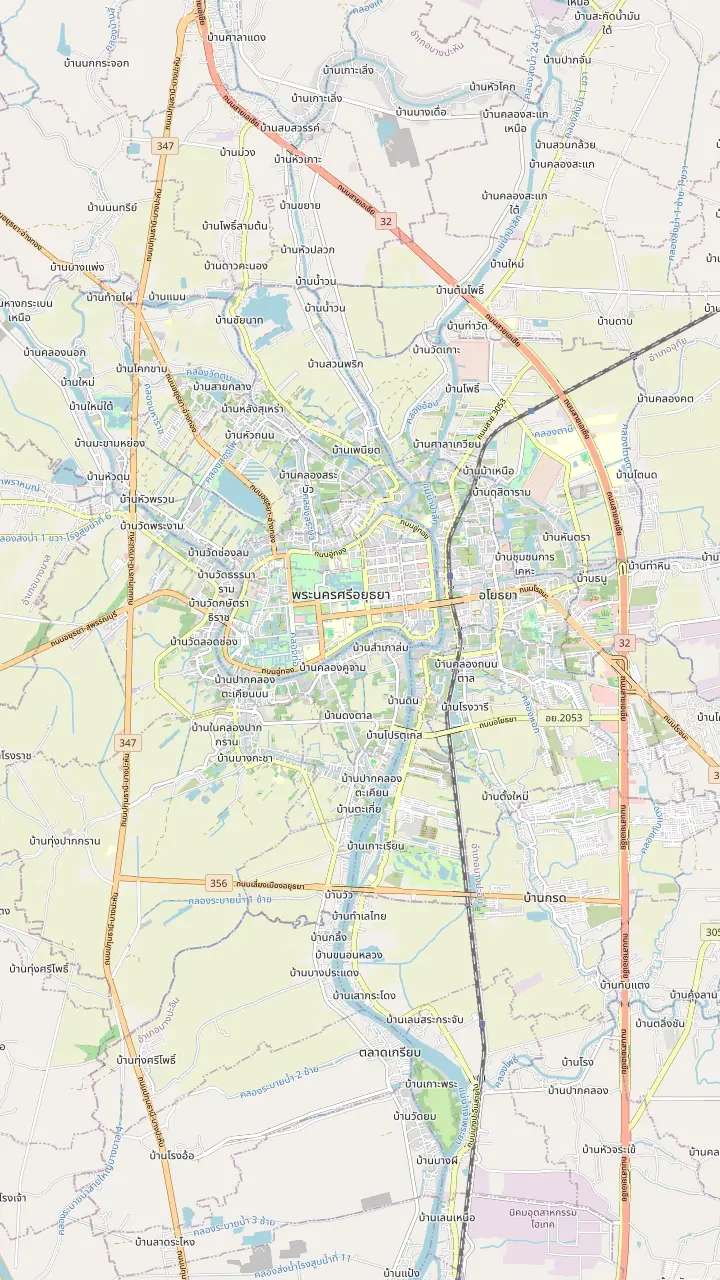
Wat Phra Si Sanphet stands by the royal palace grounds and is open every day from 08:00 to 18:00.
Google MapsWat Maha That is the home of the Buddha head in tree roots.
Google MapsThe Maha Loi Krathong @Ayutthaya was opened at Wat Phra Ram.
Google MapsThe thieves of 1957 dug under the pagoda of Rat Burana Temple, which led to the national museum.
Google MapsThe museum is open every day from 09:00 to 16:00.
Google MapsThe Thai Boat Museum is around 400 m from Wat Mahathat.
Google MapsAyutthaya railway station, the arrival point for trains from Bangkok.
Google MapsWat Phanan Choeng is 2.5 km from the roundabout.
Google MapsThe Japanese Village is 4 km from the roundabout and open from 08:00 to 17:00.
Google MapsThe Portuguese Village memorial is open every day from 09:00 to 17:00 with no admission fee.
Google MapsThe Dutch Village is 3 km from the roundabout.
Google MapsWat Yai Chai Mongkhon is 1 km from the roundabout and open every day from 08:00 to 17:00.
Google MapsThe market sits outside the city island, 1 km from the Wat Sam Pluem roundabout.
Google MapsWat Chaiwatthanaram is open every day from 08:00 to 18:00.
Google MapsThe Ancient City Floating Market at Wat Tha Ka Rong is west of the city island.
Google Maps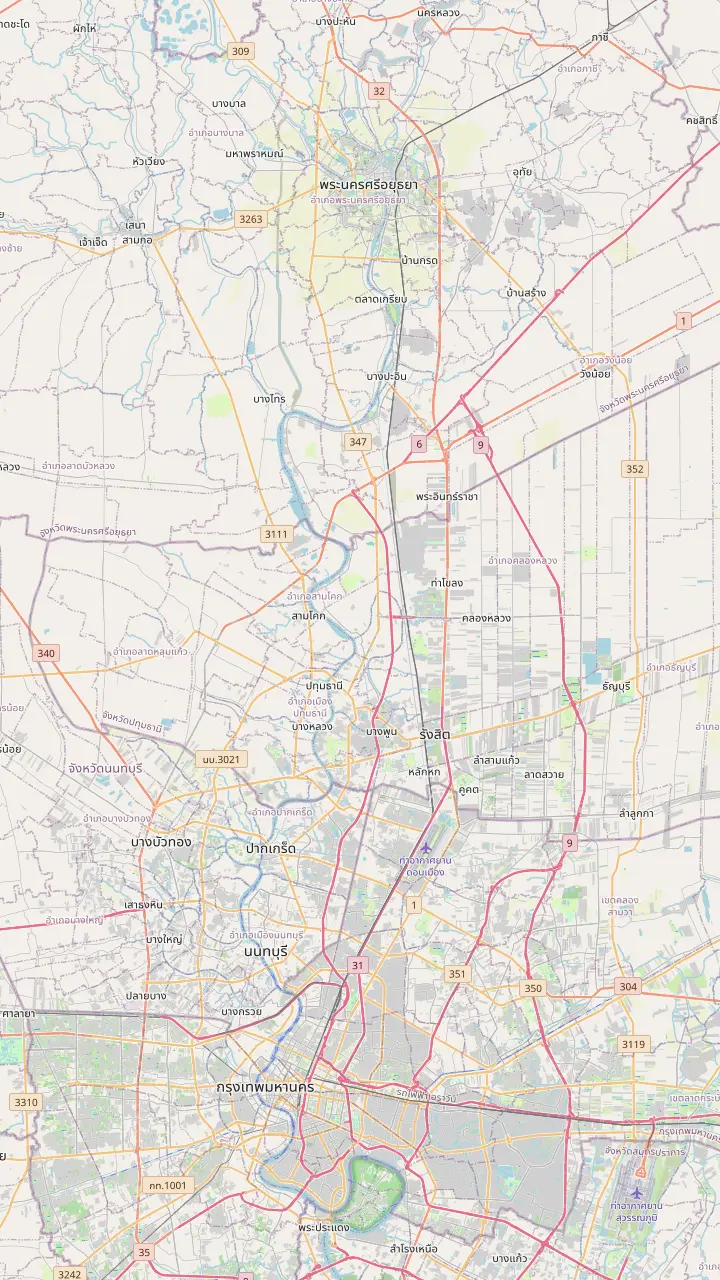
Bangkok Railway Station at Hua Lamphong, a Bangkok reference point.
Google MapsThe central station at Bang Sue, a Bangkok rail hub.
Google MapsMo Chit station in northern Bangkok.
Google MapsVictory Monument, a Bangkok transport hub.
Google MapsDon Mueang station on the northern rail line out of Bangkok.
Google MapsAyutthaya railway station, the arrival point for trains from Bangkok.
Google MapsThe market sits outside the city island, 1 km from the Wat Sam Pluem roundabout.
Google MapsBang Pa-In Royal Palace, between Bangkok and Ayutthaya.
Google Maps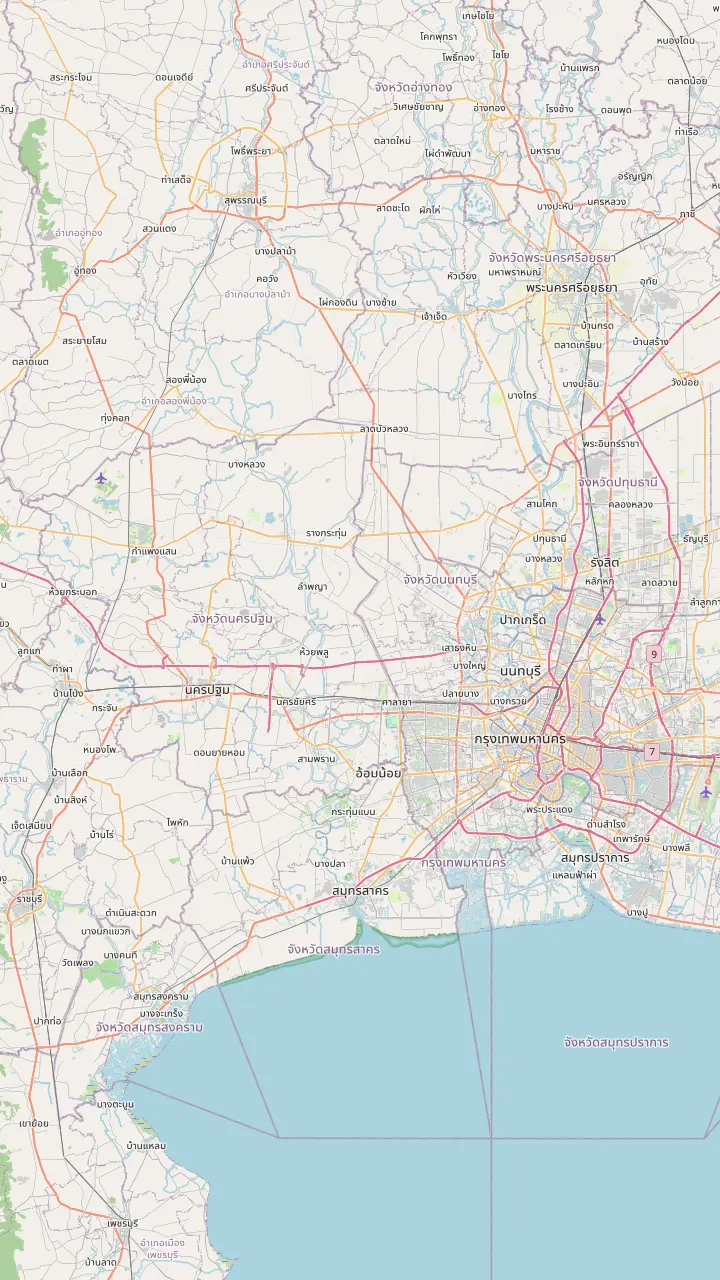
Taling Chan Floating Market, in the west of Bangkok.
Google MapsKhlong Lat Mayom Floating Market, in the west of Bangkok.
Google MapsBang Nam Phueng Floating Market, south-east of central Bangkok.
Google MapsDamnoen Saduak Floating Market, in Ratchaburi province west of Bangkok.
Google MapsAmphawa Floating Market, in Samut Songkhram province.
Google MapsThe Maeklong Railway Market, in Samut Songkhram province.
Google MapsThe market sits outside the city island, 1 km from the Wat Sam Pluem roundabout.
Google MapsTha Kha Floating Market, in Samut Songkhram province.
Google MapsBangkok Railway Station at Hua Lamphong, a Bangkok reference point.
Google Maps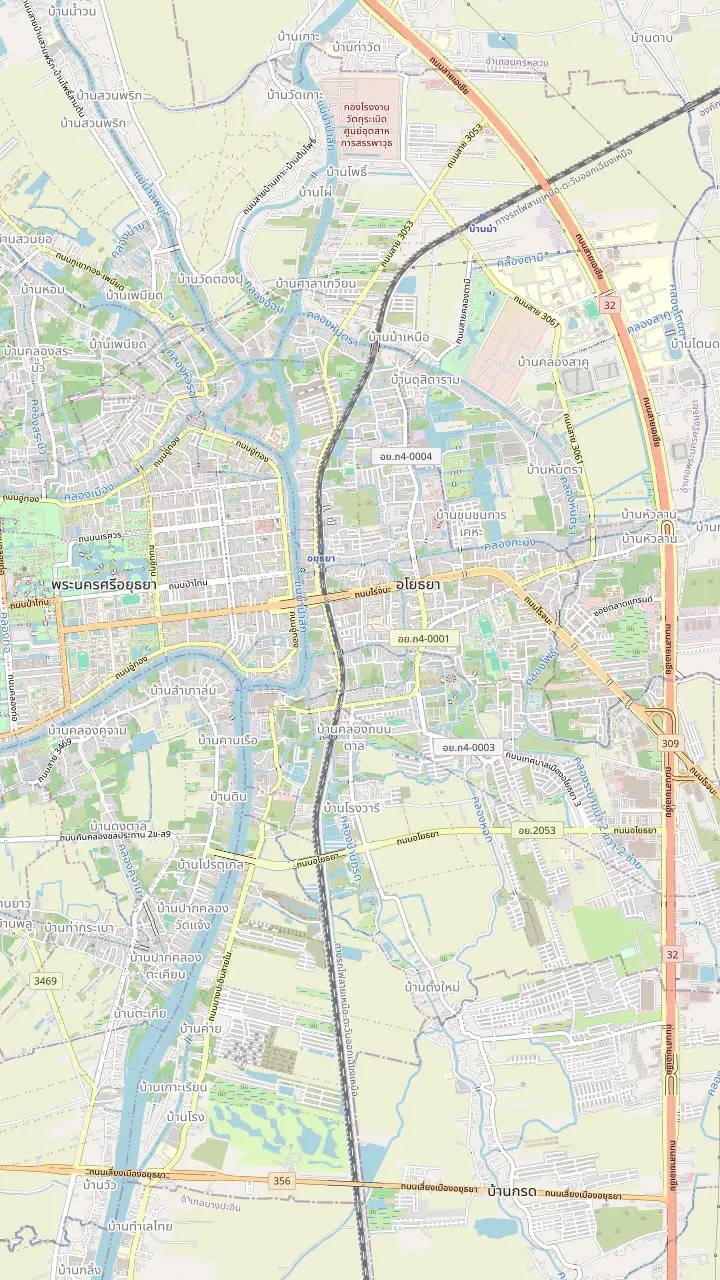
The market sits outside the city island, 1 km from the Wat Sam Pluem roundabout.
Google MapsThe province measures distances on the east side from this roundabout.
Google MapsWat Yai Chai Mongkhon is 1 km from the roundabout and open every day from 08:00 to 17:00.
Google MapsA temple north-east of the market, shown here to orient the area.
Google MapsAyutthaya railway station, the arrival point for trains from Bangkok.
Google MapsWat Phanan Choeng is 2.5 km from the roundabout.
Google MapsThe Japanese Village is 4 km from the roundabout and open from 08:00 to 17:00.
Google MapsThe Portuguese Village memorial is open every day from 09:00 to 17:00 with no admission fee.
Google MapsThe Dutch Village is 3 km from the roundabout.
Google Maps© OpenStreetMap contributors, map data
A capital on an island of three rivers, a port for Asia and Europe, a city that fell and a ruin that is now protected: the story in order, with the places to see it.
Editorial team, ayutthayafloatingmarket.com · Updated November 12, 2026 · 9 min reading time
Quick look
Ayutthaya dates from 1350, TAT says, and took over as the major capital of Siam after Sukhothai.1 Its builders chose an island: the city sat where three rivers met and joined the Gulf of Thailand, which TAT calls its strategic position.2 The province credits King U-Thong with building the original royal palace beside the site where Phra Si Sanphet stands today.10 Water was the road, the moat and the market street all at once, and every later chapter of the story grows out of that choice.
Think of the island as a natural fortress and a natural port. Boats came up the rivers to the walls, goods moved between districts by canal, and neighbourhoods grew along the banks. TAT describes the city at its peak as one of the largest and most beautiful in the world, with gilded temples and busy waterways.11 That picture explains why the memory of a water city survives today in names, festivals and the markets that carry the name of Ayutthaya.
The palace moved within the city as the dynasty grew. The province says the original palace was used for 98 years before King Borom Trailokanat moved it to the north side and left the old ground for religious ceremonies.10 Only the bases of the buildings remain, yet the province says they show the structure and plan of the ancient palace, and that this structure was the prototype for the Grand Palace in Bangkok.9,12
Beyond the temples
| Place | What it tells | Hours | Worth knowing |
|---|---|---|---|
| Portuguese Village | The first European community4 | 09:00 to 17:0027 | No admission fee27 |
| Dutch Village | The second European community19 | 09:00 to 17:0028 | Other parts than the exhibition are free28 |
| Japanese Village | Settlers and Yamada Nagamasa21 | 08:00 to 17:0029 | Audio guides in Thai, Japanese and English30 |
| Chao Sam Phraya Museum | Treasures from the ruins31 | 09:00 to 16:0032 | Opened in 196133 |
| Royal palace grounds | Bases of the palace9 | Open anytime34 | Prototype for Bangkok's Grand Palace12 |
Hours and details come from the Ayutthaya province tourism site and TAT Newsroom; prices for visitors from abroad are not given there, so ask at the ticket desk.27,28,29,32,34
What Ayutthaya was famous for, in its own age, was trade. TAT says it was a centre of diplomacy and commerce that attracted traders from Asia and Europe seeking luxury goods and Thai rice,3 and records a tradition that by 1700 it held one million people, more than any other city on earth.13 Siamese ambassadors travelled to France, Japan, China and Mughal Delhi.16 A city that sends and receives envoys at that range is a node on a network, not a provincial capital.
The Portuguese were the first Europeans to arrive: the province says they came from 1511 in the reign of King Ramathibodi II, and that three Catholic churches were built for them.4,17 Excavations at the Portuguese Village site found more than 200 human skeletons.18 The Dutch followed as the second European people to come to Ayutthaya, according to the province.19 Each community left a trace in the ground, and the memorial villages beside the river collect what archaeologists found.
Around 1,000 to 1,500 Japanese people settled in the neighbourhood by the Chao Phraya River, according to the province,20 and its Japanese Village tells the story of Yamada Nagamasa, who rose to become an official in the Ayutthaya state.21 The province also names Thao Thong Kip Ma, of half Portuguese and half Japanese descent, who was regarded as the maestro of Thai desserts.22 The cosmopolitan city shaped the kitchen as well as the court, which is why Ayutthaya food still carries stories of the people who cooked it.
Measured in metres
Today the Ayutthaya market you are most likely to meet is the Ayothaya Floating Market, which the province calls newly built and like traditional floating markets.38 It does not claim to be the old trade; it borrows the image of the water city for a pleasant day out. Its practical guide sits elsewhere on this site, and the point here is simply that the name is a modern echo of a very old idea about life on the water.
Other places keep the theme in other ways. The Ancient City Floating Market, beside Wat Tha Ka Rong, lies on the Chao Phraya,39 and the Thai Boat Museum, a private museum established in 1994, shows various types of old boats and replicas of royal barges.40,41,42 Both are easy to add to a day in the old city and neither asks for much time. If you want to understand what the water city looked like, a morning among those boats tells you more than a dozen plaques at a ruin.
The festivals are the most direct link. TAT says the Aquatic Phansa Festival at Khlong Lat Chado parades candles on local boats decorated with flowers,43 and the Maha Loi Krathong @Ayutthaya has been opened at Wat Phra Ram inside the Historical Park.44 Rivers and canals still carry ceremony as well as traffic here, which is a pleasant surprise for anyone who thinks of Ayutthaya only as a field of ruins, and a festival date is the best time to see the water city act like itself.
Choose your stop
Say what you hope to see and the stop follows.
If I want the famous Buddha head
Wat Maha That
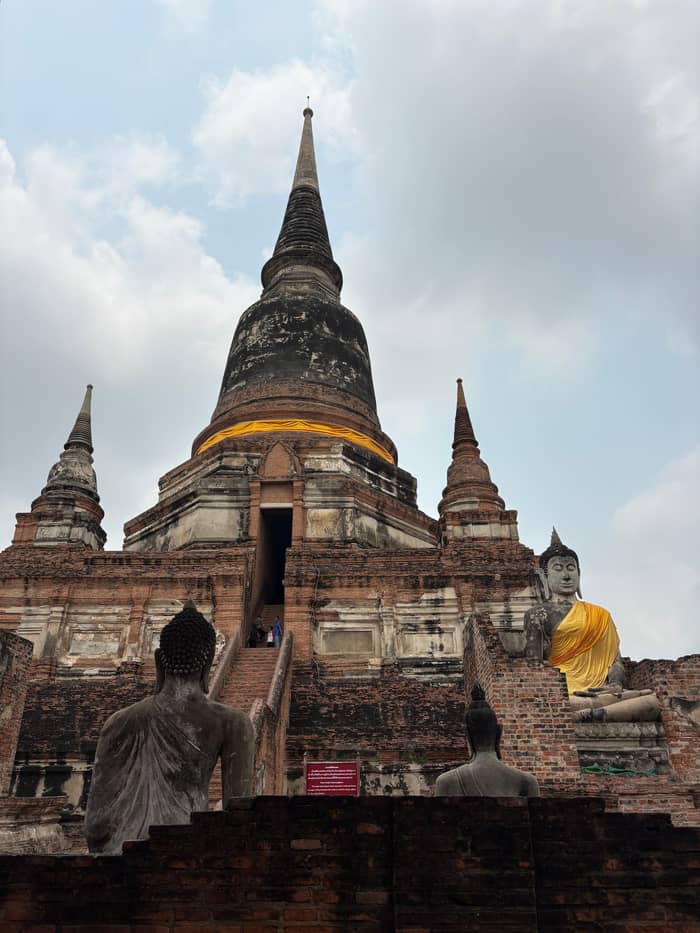
The province calls it a must-see ruin for the head of a Buddha image encompassed by tree roots.8
If I want a climb with views
Wat Yai Chai Mongkhon
TAT describes steep steps up to the foot of its 62-metre chedi.23
If I want a sunset by the river
Wat Chaiwatthanaram
The province says visitors can spend time by the Chao Phraya River there to enjoy the sunset.37
If I want treasures under glass
Chao Sam Phraya Museum
The museum shows treasures found at Wat Maha That and is open until 16:00.31,32
If I want the foreign trade story
The memorial villages
The province tells of Portuguese, Dutch and Japanese communities at Ayutthaya.4,19,20
Three ways to meet the past
The ruins
Wat Maha That
Compare the options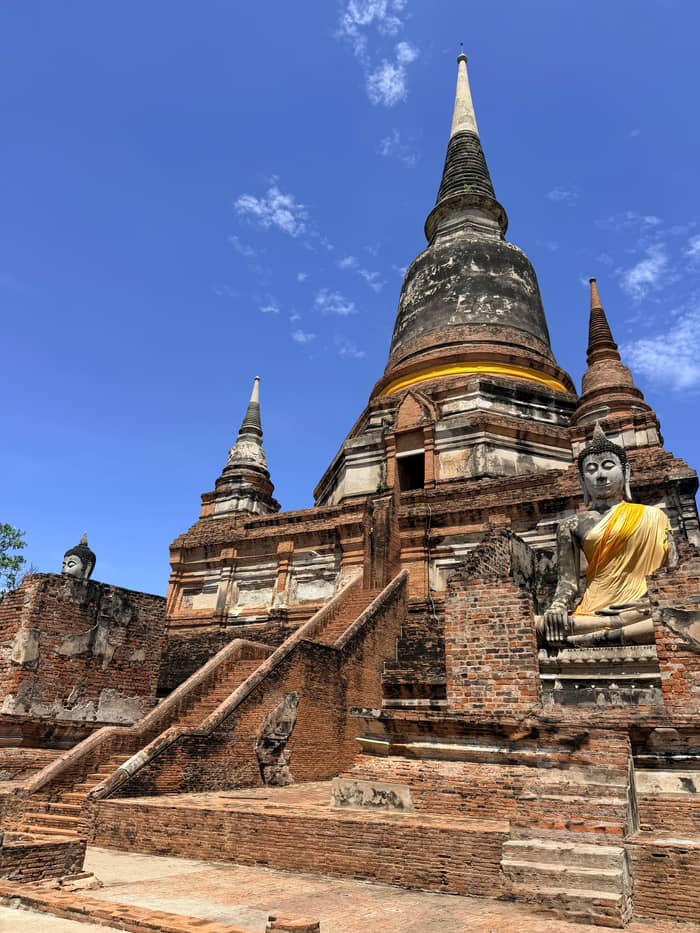
The treasures
Chao Sam Phraya
Compare the options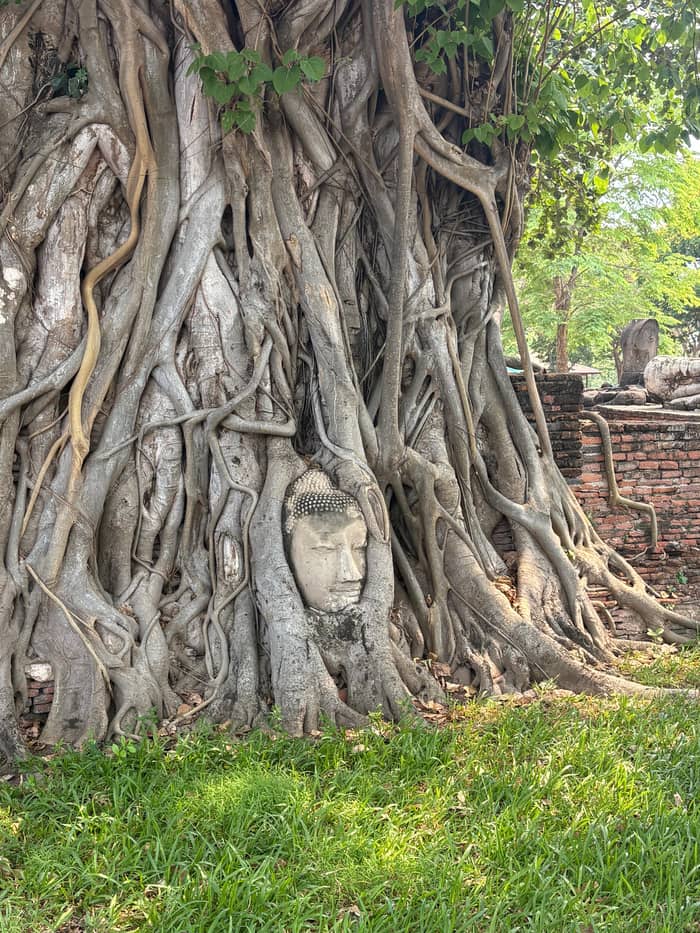
The trade story
Japanese Village
Compare the optionsAsk what Ayutthaya is famous for today and the answer is its ruins. A handful of names come up in nearly every plan: Wat Phra Si Sanphet, Wat Maha That, Wat Yai Chai Mongkhon and Wat Chaiwatthanaram. TAT adds that the legendary beauty of Wat Phra Sri Sanphet made it the pattern for Bangkok's Temple of the Emerald Buddha,57 and the province names three big Ceylonese pagodas as its unique components.58 A detailed temple-by-temple guide belongs to a different page; here the aim is to place each one in the story.
Wat Maha That is where the Buddha head sits in the roots of a Bodhi tree, which TAT calls the city's most famous Buddha image.59 TAT also calls the temple the oldest, started around 1374.36 The province adds that the Fine Arts Department found a great number of treasures there, now shown in the Chao Sam Phraya National Museum.31 It is a good first stop for readers who want the postcard and the museum in the same hour.
Wat Yai Chai Mongkhon has a 62-metre chedi, and visitors climb steep steps to its base,23 which TAT dates to around 1357 under King U-Thong,60 whereas the province links the big pagoda to King Naresuan's victory and to the temple's renaming from Wat Pa Kaeo.61 The official accounts differ, which is a reason to treat early dates as tradition rather than certainty. Wat Chaiwatthanaram, in the Khmer style, has a central prang 35 m high that represents Mount Meru.25
Compare the day trips
Enter a party size to see the temple day trips side by side.
Weigh up 3 options
Enter a party size to see the temple day trips side by side.
≈
View≈
View≈
ViewStarting prices from GetYourGuide, converted at the ECB reference rate. You will see the exact price when booking.
The story in order
Founding
TAT dates the city to 1350 and names it the capital that followed Sukhothai.1
European contact
The province says the Portuguese came to Ayutthaya from 1511.4
The peak
TAT passes on a claim that by 1700 Ayutthaya held one million people and was the largest city anywhere.13
The fall
Wat Phra Sri Sanphet was badly damaged once Ayutthaya fell in 1767.5
Revival
Historic sites were registered in 1935 and the Historical Park Project followed in 1976.14,15
Recognition
UNESCO made Ayutthaya a World Heritage Site in 1991.7
TAT notes that Wat Phra Sri Sanphet was badly damaged once Ayutthaya fell in 1767.5 The province adds that bricks from the city's architecture were demolished to build Bangkok, which left various ruins destroyed and abandoned.6 That is the plain history of what happened to Ayutthaya: a capital fell, a city was stripped for its materials and the ruins were left to the grass. What visitors see today is the skeleton of a great city, not its flesh.
Restoration came in stages. The province says the Fine Arts Department registered many historic sites around the city island in 1935,14 and the Ayutthaya Historical Park Project was established in 1976.15 UNESCO listed the historic city as a World Heritage Site in 1991, TAT says,7 and the ruins have since received World Night View Heritage certification.62 Each step made the ruins easier to visit and harder to loot.
The museum story shows why protection mattered. The province says the Chao Sam Phraya National Museum was prompted by an incident in 1957 in which thieves dug for treasures under the pagoda of Rat Burana Temple,47 and that the museum was established in 1961.33 The treasures found in the ground at Wat Maha That went there too.31 If you visit only one museum in town, this is the one that explains what the ruins once held.
Video
CNA Insider on YouTube · The clip loads only after you tap play.
Ayutthaya flourished thanks to its strategic position on an island surrounded by three rivers that connected it to the Gulf of Thailand
Checklist
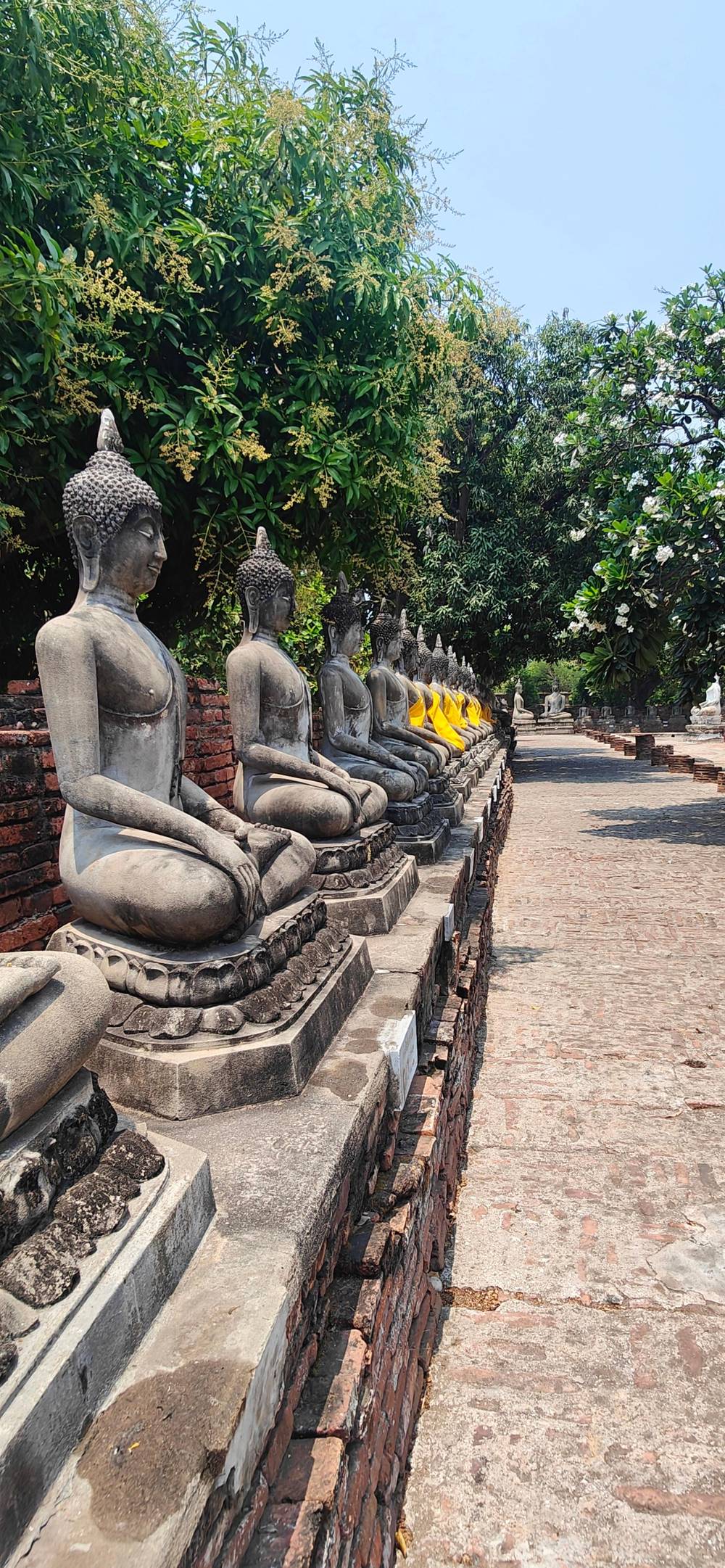
At Wat Chai Watthanaram the province counts 120 Buddha images along the corridor, almost all without heads,56 and says the riverside is a good place for the sunset.37 At Wat Phanan Choeng the Luang Pho To Buddha image is 19 m high,26 and the province believes the temple may be older than the city itself.63 People there feed or release fish in the Pa Sak River as merit making.64 These two stops reward slow looking: count the headless figures, then stand under the great seated Buddha and notice how the river sets the rhythm of each visit.
The memorial villages are smaller and quieter. The Japanese Village welcomes visitors daily between 08:00 and 17:00,29 and TAT says its Virtual Reality Street Museum offers audio guides in Thai, Japanese and English.30 The Dutch Village and the Portuguese Village are both open from 09:00 to 17:00,28,27 so the whole foreign trade story fits in an unhurried afternoon, and none of them needs more than a short visit.
The royal palace grounds have no closing or opening time and can be visited anytime, according to the province.34 The Chao Sam Phraya National Museum keeps hours of 09:00 to 16:00 each day,32 so plan it before the afternoon. Wat Maha That, Wat Phra Si Sanphet and Wat Chaiwatthanaram are open from 08:00 to 18:00.35,46,54 Start early and the heat is kinder to you than to the stones, and the light on the brick is better for photographs before the middle of the morning.
A day trip compresses a kingdom into a few hours. The Bangkok day trip sold on this site gives Wat Yai Chai Mongkhon 1 hour, Wat Maha That 45 minutes and Wat Phra Sri Sanphet 45 minutes, with 1 hour at the Ayothaya market between them. That is enough for the headline sites and for the story told in this guide, though not for the museums or the memorial villages, which need a second visit or a longer day.
A temples-only day looks different: a listing built around Wat Chaiwatthanaram and Wat Lokaya Sutha, then Maha That and Phra Sri Sanphet, with 1 hour for lunch and no market stop. A guided historical park day by van lists Bang Pa-In Royal Palace as well, from $28. Pick the shape that fits the story you want: a taste of everything, temples in depth, or a longer day with a royal palace. Whichever you choose, read the temple names in advance so the guide's commentary lands on familiar ground.
If you have more time, split the day. Spend the morning on the ruins while it is cool and the afternoon on a museum or a village, then finish at the water for sunset. Clothes that cover shoulders and knees are required at the temples on that listing, so pack for the temples first and the weather second. Read this page before you go and the ruins become places with names and reasons, which is the whole difference between a day of photographs and a day of understanding.
FAQ
TAT dates the city to 1350 and names it the capital that followed Sukhothai.1
TAT says Ayutthaya was made a UNESCO World Heritage Site in 1991; the park now holds the remains of temples and palaces.7
The province calls the Ayothaya Floating Market newly built and like traditional floating markets.38
Sources
Planning Ayutthaya and its market? Ask a real person here.